

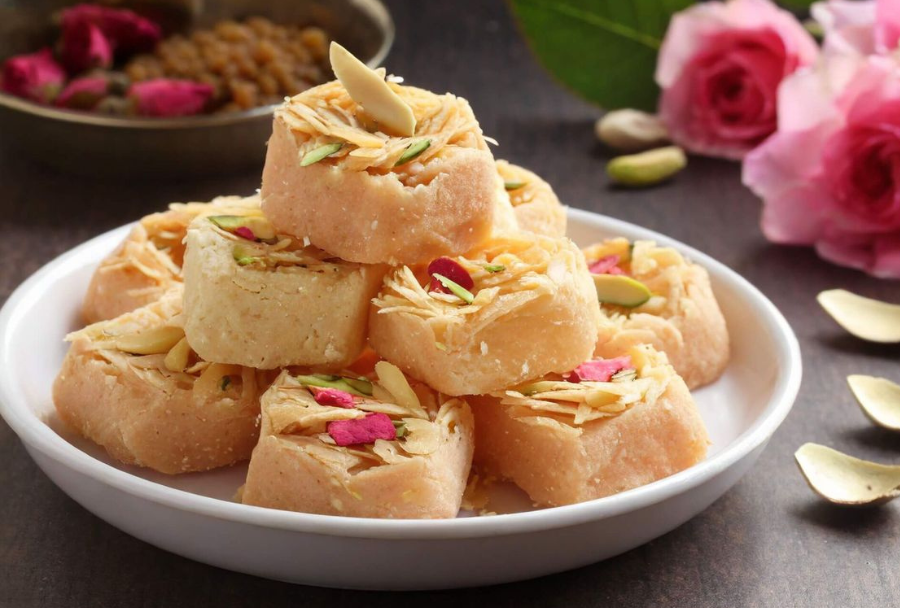
Soan Papdi is a light, flaky, melt-in-the-mouth traditional Indian sweet, made with the richness of ghee, sugar, gram flour, and aromatic flavorings. Known for its delicate, thread-like texture, this delicacy is a festive favorite across India, especially during Diwali, weddings, and special celebrations. With its irresistible aroma and rich flavor, Soan Papdi is more than just a sweet — it’s a piece of Indian culinary heritage on your plate.
What makes Soan Papdi truly special is its airy, layered texture, which gives it a crisp yet melt-in-the-mouth sweetness. Traditionally prepared by roasting gram flour and combining it with sugar syrup and ghee through a specialized pulling technique, this sweet forms delicate strands that are then shaped into squares or bite-sized portions. Each bite offers a delicate blend of sweet, nutty, and lightly fragrant flavors, making it an indulgence worth savoring.
Beyond its taste, Soan Papdi is a wholesome treat when enjoyed in moderation — the gram flour brings protein and fiber, while ghee contributes healthy fats, making it both satisfying and energizing. Its flaky texture and inviting aroma make it not just a dessert but also a beautiful centerpiece for festive platters.
Steeped in history, Soan Papdi originated in northern India, with recipes evolving over centuries in royal kitchens and sweet shops. Over time, it has become a beloved sweet across India, available in variations from classic nutty to saffron-infused versions. Whether served as part of a lavish festive spread, gifted in decorative boxes, or enjoyed with a cup of chai, Soan Papdi delivers a perfect balance of tradition, richness, and indulgence.
What is Soan Papdi?
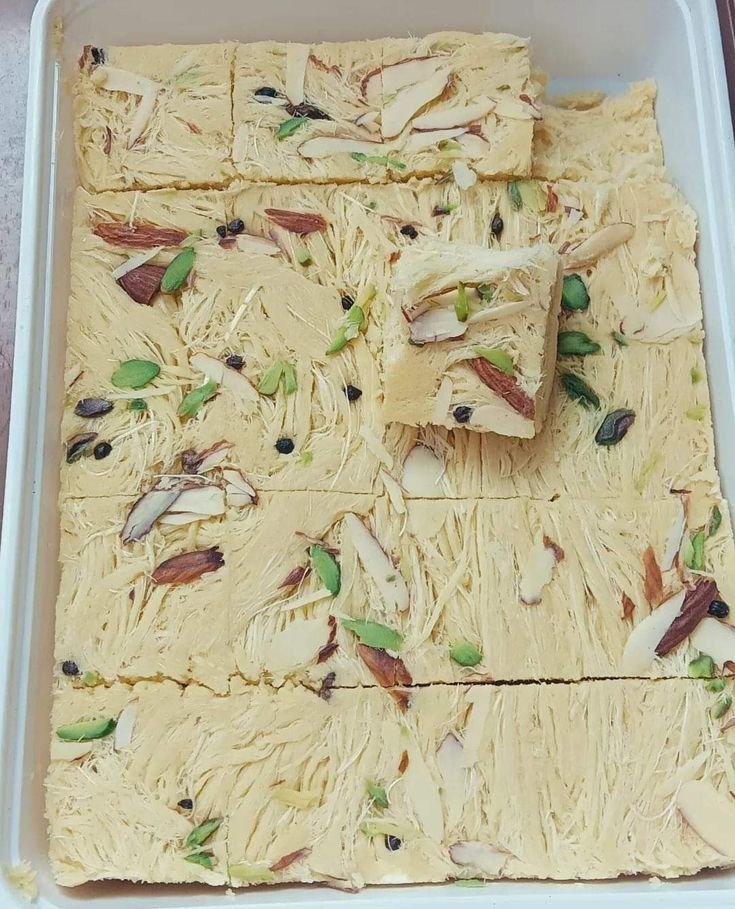
Soan Papdi is a legendary Indian sweet, celebrated for its delicate, flaky texture and melt-in-the-mouth indulgence. Originating in northern India, this golden or off-white confection is made from a few main ingredients — gram flour, sugar, ghee, and flavorings — yet delivers a flavor and aroma that’s nothing short of luxurious. Known for its thread-like strands and crisp yet tender bite, Soan Papdi is a staple at weddings, festivals, and joyous celebrations.
What makes Soan Papdi unique is the technique — sugar syrup is cooked to a specific consistency, then mixed with roasted gram flour and pulled repeatedly to create delicate, airy strands. The result is a sweet that’s rich, nutty, and lightly aromatic, with each bite offering a perfect harmony of flavor and texture.
Unlike many Indian sweets that are dense or heavy, Soan Papdi stands out for its lightness and intricate flaky texture. Depending on the recipe, it can include pistachios, almonds, or saffron, but always remains irresistible.
In Indian households, Soan Papdi evokes memories of festive Diwali boxes, temple offerings, and family gatherings. It’s equally cherished as a gift, sweet, presented in decorative boxes and shared with loved ones during special occasions.
The appeal of Soan Papdi lies in its artistry — minimal ingredients transformed through skill into an indulgent, flaky sweet. Whether enjoyed fresh from the kitchen or savored as a festive centerpiece, Soan Papdi embodies tradition, celebration, and timeless taste.
History & Cultural Roots
Soan Papdi finds its origins in northern India, where it was historically prepared in royal kitchens and sweet shops. Made with gram flour, sugar, and ghee, it symbolized celebration and generosity. Its preparation evolved over time, with each region introducing subtle variations — some flavored with saffron, cardamom, or nuts — reflecting local tastes while maintaining its airy, flaky essence.
Initially, Soan Papdi was reserved for festive occasions, representing prosperity and joy. Sweet shops across India later popularized it, making it accessible to households during Diwali, weddings, and family celebrations. Its delicate sweetness and fragile texture quickly made it a cultural emblem, cherished across generations.
Today, Soan Papdi enjoys nationwide recognition, transcending its royal and shop origins to become a beloved treat in sweet shops and homes across India. Its enduring appeal lies in its simplicity, intricate technique, and rich flavor — just a few ingredients transformed into a luxurious sweet that evokes tradition, warmth, and festivity.
Soan Papdi traces its origins to northern India, where it was historically crafted in royal kitchens and renowned sweet shops. This delicate, flaky sweet was made from a simple yet luxurious combination of gram flour (besan), sugar, ghee, and sometimes milk, reflecting both richness and artistry. Traditionally, Soan Papdi symbolized celebration, prosperity, and generosity, often offered during festivals, weddings, and joyous gatherings. Its preparation required skillful roasting of gram flour, precise sugar syrup cooking, and repeated pulling to create the signature airy, thread-like texture.
Over time, regional variations emerged, with some versions infused with saffron, cardamom, or finely chopped nuts, adding subtle fragrance and flavor without compromising the delicate strands. These adaptations allowed the sweet to reflect local tastes while preserving its essential lightness and crispiness.
Initially reserved for festive occasions, Soan Papdi gradually became widely popular through sweet shops, making it accessible to households across India. Today, it enjoys nationwide recognition, celebrated not only during Diwali and weddings but also as a daily indulgence. Its charm lies in the combination of minimal ingredients and intricate technique, resulting in a sweet that is simultaneously light, luxurious, and aromatic. Soan Papdi remains a cultural icon, embodying tradition, skill, and festive joy for generations.
Ingredients
Main Ingredients:
- 2 cups gram flour (besan), roasted
- 1 cup sugar
- ½ cup ghee
- ½ cup water
Optional Flavor Enhancers:
- ¼ tsp cardamom powder
- A few strands of saffron
- 2–3 tbsp finely chopped pistachios or almonds
For Garnish (Optional):
- Chopped nuts
- Edible silver leaf (varq)
Cooking Science: Why Soan Papdi Works So Well
Soan Papdi owes its delicate, thread-like texture to the careful roasting of gram flour, precise sugar syrup cooking, and repeated pulling with ghee. Roasted gram flour contains proteins and starches that, when combined with sugar syrup, create a pliable base. The pulling technique introduces air, forming thin, crisp strands that give Soan Papdi its characteristic flaky texture.
Flavorings like cardamom and saffron add aromatic depth, while optional nuts provide subtle crunch. Cooking on low heat prevents scorching and ensures even consistency. Gentle stirring and gradual mixing are essential to avoid lumps, ensuring the final sweet is light, airy, and melt-in-the-mouth.
Soan Papdi owes its signature delicate, thread-like texture to a combination of precise techniques and careful ingredient handling. The process begins with roasting gram flour (besan) to perfection. Proper roasting not only enhances its nutty aroma but also modifies the starch and protein structure, which is essential for forming a pliable base when combined with sugar syrup. Cooking sugar to the correct one-string consistency ensures that it binds the mixture effectively without becoming too hard or too soft.
The magic of Soan Papdi lies in the repeated pulling of the mixture with ghee. This pulling incorporates air, creating the characteristic fine, airy strands that make the sweet light and flaky. Gentle, continuous stirring and low-heat cooking prevent scorching and allow the mixture to cook evenly. Gradual mixing of sugar syrup and ghee into the roasted gram flour ensures a smooth, homogeneous mixture without lumps.
Flavorings like cardamom, saffron, or rose water add subtle aromatic layers, enhancing the overall sensory experience. Optional nuts, such as pistachios and almonds, provide a delicate crunch, contrasting beautifully with the soft, melt-in-the-mouth strands. The interplay of these careful techniques and ingredient interactions is what gives Soan Papdi its iconic, delicate texture and irresistible, luxurious taste, making it a truly timeless Indian sweet.
Pro Tips Before You Start
- Use Fresh, Aromatic Ghee: Fresh ghee enhances flavor and helps create crisp strands.
- Roast Gram Flour Properly: Lightly roasted flour ensures a nutty aroma without burning.
- Cook Sugar Syrup to Correct Consistency: Too thin and the strands won’t form; too thick and the sweet will harden.
- Pull the Mixture Carefully: Proper pulling creates the flaky, thread-like texture.
- Low Heat is Key: Prevents burning and preserves aroma.
- Add Nuts Gradually: Incorporate chopped pistachios or almonds at the right stage for even distribution.
- Flavor Wisely: Cardamom and saffron enhance aroma; a little goes a long way.
- Use a Non-Stick Pan: Helps prevent sticking during cooking.
- Work Quickly: The mixture sets fast; pull and shape immediately.
- Grease Hands or Tools Lightly: Prevents sticking while shaping.
- Store Properly: Airtight containers maintain crispness and freshness.
- Layer with Parchment Paper: Prevents strands from sticking when stacking.
- Avoid Overcooking: Preserves delicate strands and flavor.
- Serve Fresh: The sweet is most delicate when freshly made.
- Practice Pulling Technique: Proper pulling ensures traditional flaky texture.
Step 1: Prep the Ingredients
Measure out roasted gram flour, sugar, ghee, cardamom powder, saffron, and any optional nuts or garnishes. Keep everything ready for smooth preparation.
Step 2: Heat the Pan
Place a non-stick pan over low heat and warm slightly. This prevents sticking and ensures even cooking.
Step 3: Cook the Gram Flour
Add roasted gram flour and gently stir for 2–3 minutes to release aroma.
Step 4: Prepare Sugar Syrup
In a separate pan, combine sugar and water. Cook to one-string consistency, then gradually add ghee while stirring.
Step 5: Mix & Pull
Combine the sugar syrup with gram flour and pull the mixture repeatedly until it forms delicate threads.
Step 6: Add Flavorings
Mix in cardamom, saffron, and optional chopped nuts evenly.
Step 7: Cool Slightly
Allow the mixture to cool for a few minutes until manageable but still pliable.
Step 8: Shape the Soan Papdi
Divide into equal portions and shape into squares or small rolls. Use molds if desired for traditional designs.
Step 9: Garnish & Serve
Top with chopped nuts or silver leaf. Serve fresh for best texture or store in an airtight container for 2–3 days.
Watch the Video Tutorial
Prefer to watch step-by-step? Here’s a video that walks you through the process of making Soan Papdi:
➡️ Watch Soan Papdi Video Tutorial
Serving Suggestions – Soan Papdi
Arrange on a decorative plate or festive thali. Squares or rolls work best, garnished with pistachios, almonds, or silver leaf. Pair with masala chai or coffee. Include alongside barfi, kaju katli, or other sweets for festive spreads.
Soan Papdi is not only delicious but also visually appealing, making it a perfect centerpiece for festive spreads and celebratory occasions. For an elegant presentation, arrange the pieces on a decorative plate, a festive thali, or a banana leaf, which adds a traditional touch. The classic square or rolled shapes work best, offering uniformity and ease of serving. Garnishing with slivered pistachios, almonds, or edible silver leaf (varq) enhances both the aesthetic appeal and flavor, providing a subtle crunch against the melt-in-the-mouth texture of the sweet.
Pairing Soan Papdi with beverages like warm masala chai or South Indian filter coffee creates a delightful balance between the sweet, airy layers and the robust, spiced flavors of the drinks. It also complements other traditional Indian sweets such as barfi, kaju katli, or laddus, making it a versatile addition to festive platters or gift boxes.
Nutritionally, each piece (~25 g) provides around 120–150 kcal, with 2–3 g of protein, 6–8 g of fat, and 15–18 g of carbohydrates. Naturally gluten-free, Soan Papdi delivers a balance of indulgence and nourishment, with protein from gram flour and healthy fats from nuts and ghee. Its light, flaky texture and inviting aroma make it an irresistible treat for both casual snacking and special celebrations.
Nutritional Profile (Per Serving – 1 piece, ~25 g):
- Calories: ~120–150 kcal
- Protein: ~2–3 g
- Fat: ~6–8 g
- Carbohydrates: ~15–18 g
- Gluten: Naturally gluten-free
Storage & Reheating – Soan Papdi
Store in an airtight container at room temperature. If stacking, separate layers with parchment paper to prevent sticking. Keep away from moisture and strong odors. For gifting, wrap individually in butter paper or food-safe plastic. Avoid microwaving. Best enjoyed fresh.
Proper storage is essential to maintain Soan Papdi’s delicate, flaky texture and melt-in-the-mouth quality. Always store it in an airtight container at room temperature, ensuring that no moisture or humidity reaches the sweet. Exposure to moisture can make the strands sticky and heavy, compromising the light, airy texture that is characteristic of Soan Papdi. If you need to stack multiple layers, separate them with parchment paper or wax paper to prevent the pieces from sticking together and losing their crispness.
Keep the container away from strong-smelling foods, as Soan Papdi easily absorbs odors, which can affect its subtle nutty and cardamom flavors. For gifting or special occasions, wrap each piece individually in butter paper or food-safe plastic to maintain freshness, presentation, and hygiene. This also helps preserve the delicate layers and prevents them from breaking during handling.
Unlike some sweets, Soan Papdi should not be microwaved, as direct heat can melt the sugar syrup, collapse the airy strands, and alter the texture entirely. It is best enjoyed fresh, straight from the container, at room temperature. Properly stored, Soan Papdi can remain light, crisp, and aromatic for several days, allowing you to enjoy this traditional Indian sweet at its best without compromising on its signature flaky, melt-in-the-mouth experience.
How This Recipe Works – Soan Papdi
Soan Papdi achieves its iconic light, flaky, melt-in-the-mouth texture through a combination of careful ingredient preparation and traditional techniques. The process begins with roasting gram flour (besan) to develop a nutty aroma and remove the raw taste. This roasted flour is then combined with a precisely cooked sugar syrup, which provides structure and sweetness. The magic of Soan Papdi lies in the pulling and folding technique, where the mixture is repeatedly stretched with ghee. This introduces air into the sweet, forming delicate, thread-like strands that give Soan Papdi its signature flaky, airy texture.
Balanced sweetness and flavor are key to making Soan Papdi delightful. Cardamom adds a fragrant warmth, while saffron lends subtle color and aroma. Optional nuts such as pistachios or almonds provide a pleasant crunch without weighing down the airy strands. Despite the intricate texture, the ingredients themselves are minimal: gram flour, sugar, ghee, and flavorings. The elegance of the sweet comes from shaping it into neat squares, rolls, or diamond patterns and garnishing with nuts or edible silver leaf, making it perfect for gifting or festive platters.
This recipe is also beginner-friendly. Clear, step-by-step instructions allow even first-time cooks to achieve the delicate balance of texture, sweetness, and aroma. The result is a luxurious, traditional Indian sweet that’s light, crisp, and indulgently satisfying.
- Soft & Melt-in-the-Mouth: Pulling creates delicate strands.
- Balanced Sweetness & Flavor: Cardamom and saffron enhance aroma.
- Minimal Ingredients: Simple gram flour, ghee, and sugar deliver maximum indulgence.
- Festive & Elegant: Neat shapes and optional garnishes make it gift-worthy.
- Beginner-Friendly: Clear steps allow successful results for all skill levels.
Extended FAQs – Soan Papdi
Q: Can I make Soan Papdi ahead of time?
A: Yes! Store in an airtight container for up to 2–3 days.
Q: Can I adjust the sweetness?
A: Reduce sugar slightly for a milder taste.
Q: Can I add flavors or toppings?
A: Cardamom is classic; saffron, nuts, or edible silver leaf can be added.
Q: How do I get smooth, neat shapes?
A: Shape while slightly warm. Use molds for uniformity.
Q: Can I make Soan Papdi without ghee?
A: Ghee is essential for texture; omitting it alters flavor and flakiness.
Q: How do I prevent strands from sticking?
A: Lightly grease hands or molds; use parchment layers for storage.
Q: Can Soan Papdi be frozen?
A: Not recommended; refrigeration is best for short-term storage.
Conclusion
Soan Papdi is a timeless Indian sweet, celebrated for its delicate, flaky texture and aromatic flavor. Made from a few simple ingredients — gram flour, sugar, ghee, and flavorings — it transforms into an airy, luxurious treat through careful technique. Each bite carries the warmth of tradition and festive indulgence.
Whether shared during Diwali, weddings, or as a gift, Soan Papdi is a cherished sweet across generations. Its simplicity, paired with delicate flakiness and rich aroma, makes it a beloved dessert that anyone can recreate at home with confidence.
